Make something from clay
Your first pottery class starts with a choice: hands or wheel?
Choose handbuilding if you want to shape and decorate an object directly; choose wheel throwing if learning to control spinning clay is the attraction. A mixed taster helps when you are undecided. A course makes more sense when you want repeated practice, not simply a finished souvenir. Before booking any Singapore pottery class, check what happens to your work after the session.
By After the Usual · How we research
Choose your kind of plan
| Format | Choose it when | The tradeoff | Ask before paying |
|---|---|---|---|
| Handbuilding introduction | You want to shape, join and decorate an object directly. | It will not answer whether you enjoy throwing on a wheel. | Which making and finishing stages will I do myself? |
| Wheel introduction | You want to try centring and shaping spinning clay. | Learning the movement may matter more than the finished shape. | How much individual wheel practice is included? |
| Mixed taster | You want to compare handbuilding and throwing before choosing. | Your practice time is divided between techniques. | How is the session split, and which pieces are retained? |
| Multi-session course | You want repetition and a fuller making process. | Attendance and finishing costs need planning beyond one visit. | Does the syllabus include student trimming and glazing? |
From the research
Options worth a closer look.
Choose by fit, not list position. Check current sessions and final terms before booking.
Choose the process you want to spend time on
Picture the activity, not only the mug on the booking page. With handbuilding, you work directly with clay using your hands and tools: pinching a form, joining parts or building up a shape. That makes it a useful starting point if you are more interested in an object's silhouette, handle or surface than in operating a wheel. It is a different approach, not a lesser version of pottery.
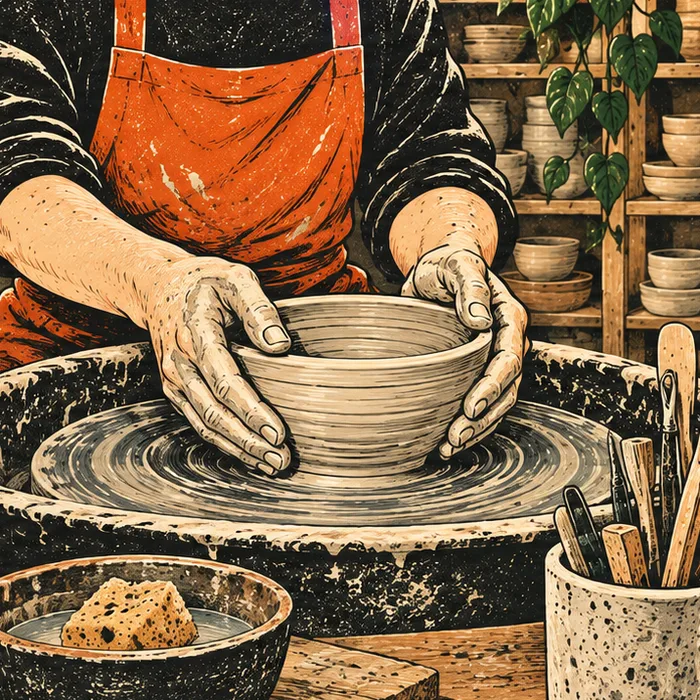
Wheel throwing asks you to learn a relationship between movement, pressure and clay. If centring and drawing up a vessel sound satisfying, choose a session that gives you time to attempt them yourself. Ask how much the instructor demonstrates or corrects. A polished result and independent practice are not necessarily the same outcome; decide which would make the session worthwhile for you.
If both appeal, a mixed introduction is a sensible way to discover your preference. The tradeoff is divided attention: sampling two techniques is not the same as spending the whole session repeating one. You do not need to settle on a future hobby before trying clay, but knowing what you want to test makes the first booking more useful.
A trial and a course answer different questions
A trial answers whether you enjoy handling clay and working in a studio. A course should help you repeat a process, notice mistakes and improve. Read the syllabus for the stages you will practise yourself, especially trimming and glazing. Choosing a glaze colour for staff to apply is different from learning to apply it, and neither should be sold to you as the other.
For a course, check attendance requirements, booking flexibility and the time allowed to use the package. For a taster, ask about active making time and the amount of shared equipment. Choose the smaller commitment when you are curious; choose repeated sessions when you want a skill you can build on. A longer package is not automatically better value if you cannot attend consistently.
Count the finished pieces, not just the wet ones
A piece shaped in class is not yet the same thing as a finished ceramic object. Before comparing session fees, ask which pieces will be kept, what glazing and firing cost, and whether you collect the work or pay for delivery. Check the studio's stated treatment of cracks, breakage and uncollected work. More clay time does not automatically mean more finished pieces included.
Do not schedule a first pottery session around a promised gift deadline without checking the completion process. If you want to use the result for food or drink, ask the studio about the particular clay, glaze and finished piece rather than assuming that every workshop object is suitable. A decorative piece can be a satisfying outcome without needing to serve as everyday tableware.
Before you decide
Should I choose handbuilding because I am a complete beginner?
Not automatically. Choose by the process you want to try, then check that the exact session accepts beginners. Handbuilding gives you direct control over assembling a form; a beginner wheel session introduces a different movement. A mixed taster is useful if you genuinely want to compare them.
Will I leave with my pottery?
Do not plan on leaving with a finished fired piece unless the selected product explicitly says so. Ask about the stages after class, the collection window and delivery before making plans around the object. The specific collection qualifications for the picks are listed above.